

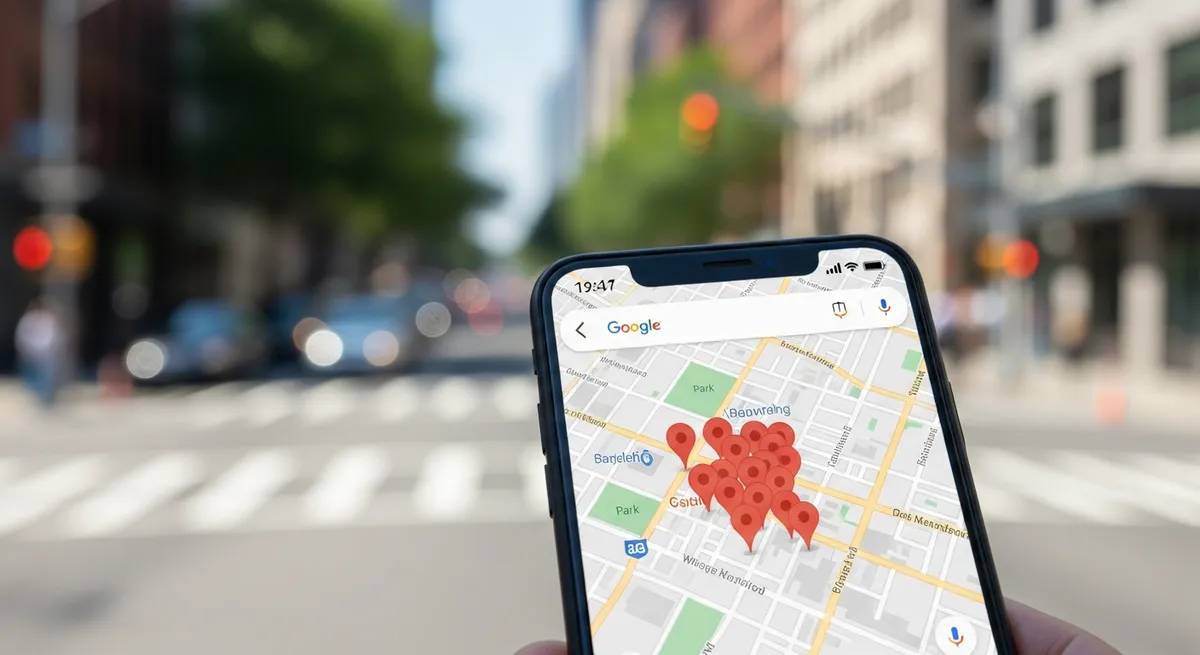
What Is Local SEO (And Why It Matters More Than Ever)
Local SEO is how you show up when nearby customers search for your services. When someone types "plumber near me" or "HVAC repair Kirkland," Google uses local signals to decide which businesses appear in the map pack and local organic results.
The numbers are hard to ignore: 46% of all Google searches have local intent. 78% of local mobile searches result in an offline purchase within 24 hours. For service businesses, local search is not just a marketing channel. It is the primary way customers find you.
Local SEO differs from traditional SEO in one key way. Traditional SEO is about ranking nationally or globally for broad keywords. Local SEO is about ranking in specific geographic areas for service-related queries. The ranking factors overlap, but local SEO adds signals like Google Business Profile optimization, local citations, and review management.
The 7 Local SEO Ranking Factors That Move the Needle
According to Whitespark's Local Search Ranking Factors study, these are the signals that determine your local visibility, ranked by weight.
Local SEO Ranking Factors (by weight)
Category, proximity, completeness, activity
NAP, keywords in titles, local content, schema
Quantity, velocity, diversity, responses
Local links, domain authority, anchor text
NAP consistency, directory presence
Click-through rate, engagement, dwell time
Search history, location, device
"The ranking factor most local businesses overlook is GBP category selection. Choosing the right primary category versus a slightly wrong one can mean the difference between appearing in the map pack or not. We had a client switch from 'General Contractor' to 'Home Builder' and saw a 40% increase in map pack impressions within 3 weeks. No other changes."
Dylan Axelson, SEO Director
Google Business Profile Optimization (The Foundation)
Your Google Business Profile is the single most important local SEO asset. Here is a scorecard to evaluate how well yours is optimized.
GBP Optimization Scorecard
Rate your Google Business Profile across 9 areas.
Building Local Citations That Still Matter
Citations are mentions of your business name, address, and phone number (NAP) across the web. Consistency is the key word. Every citation needs to match exactly.
Google Business Profile
All industries | Free
Yelp
All industries | Free (paid upgrades)
Facebook Business
All industries | Free
Better Business Bureau
All industries | Paid ($400-$600/yr)
Angi (Angie's List)
Home Services | Free listing
Apple Maps
All industries | Free
Bing Places
All industries | Free
Nextdoor
Local Services | Free
HomeAdvisor
Home Services | Pay per lead
Industry-specific directories
Varies | Varies
Start with the top 20 directories and ensure your NAP is consistent across all of them. Remove duplicate listings. Set up monitoring so you catch inconsistencies early.
Local Link Building Strategies
Local links are some of the most valuable signals for local SEO. Focus on quality over quantity. A link from your local Chamber of Commerce is worth more than 50 links from random directories.
- Chamber of Commerce membership: Nearly always includes a link from a high-authority local domain
- Local sponsorships: Sponsor a youth sports team, charity event, or community program. These often include links from event pages.
- Local media mentions: Provide expert commentary to local journalists. One link from a local news site is worth dozens of directory links.
- Community involvement: Host or participate in community events. Event pages link to sponsors and participants.
For a deeper guide, read our full article on link building for local businesses.
On-Page SEO for Local Businesses
On-page optimization for local businesses has specific requirements beyond standard SEO.
- Title tag formula: [Service] in [City], [State] | [Brand]. Example: "Plumbing Services in Kirkland, WA | Integrity Marketing"
- Local schema markup: LocalBusiness schema on your homepage and contact page. Service schema on service pages. Include service area, hours, and address.
- NAP on every page: Your name, address, and phone number should appear in your footer or on your contact page, matching your GBP exactly.
- Embed Google Maps: On your contact page and location pages. This signals geographic relevance to Google.
- Location-specific content: Create pages for each service area you serve. Not thin doorway pages, but genuinely useful content about your services in each location.
Review Strategy That Drives Rankings and Revenue
Reviews impact both rankings (16% of local ranking factors) and conversion rates. A business with 50 reviews and a 4.8 rating converts better than one with 10 reviews and a 5.0 rating. Volume matters.
- Ask every satisfied customer for a review, every time
- Make it easy. Send a direct link to your Google review page via text or email
- Time it right. Ask within 24 hours of service completion
- Respond to every review (positive and negative) within 48 hours
- Include keywords naturally in your responses ("Thank you for choosing us for your HVAC repair in Kirkland")
Tracking Local SEO Results
- GBP Insights: Views, searches, phone calls, direction requests, website clicks
- Local keyword rankings: Track positions for "[service] + [city]" queries
- Organic traffic from local searches: Google Analytics filtered by location
- Lead volume: Phone calls, form submissions, and chat inquiries from organic sources
"For multi-location businesses, we use local content hubs instead of single-page optimization. A content hub for each location, with 5-10 supporting pages covering services in that area, outperforms a single location page by 3-4x in organic traffic. Our April AI system maps the keyword clusters for each market automatically."
Dylan Axelson, SEO Director
Your Local SEO Audit Checklist
Google Business Profile
- Profile claimed and verified
- Most specific primary category selected
- 3-5 secondary categories added
- Business description written (750 characters)
- 10+ photos uploaded
- Messaging enabled
- Products/services section completed
- Weekly posts published
On-Page SEO
- City name in title tags for key pages
- LocalBusiness schema markup implemented
- NAP consistent on every page
- Google Map embedded on contact page
- Location-specific content for each service area
- Mobile-friendly design confirmed
Citations
- NAP consistency audit completed
- Top 20 directories submitted
- Industry-specific directories submitted
- Duplicate listings removed
- Citation monitoring set up
Reviews
- Review generation process in place
- Review response protocol established
- Review schema implemented
- Presence on multiple review platforms
Links
- Local Chamber/association links earned
- Community sponsorship links earned
- Local media mentions earned
- Industry directory links earned
If you need help with any of these items, our local SEO services cover all of them. You can also start with a free SEO audit to see where your biggest opportunities are.
Free Tools and Resources
These free tools will help you build and monitor your local SEO presence. We are not affiliated with any of them.
- Google Business Profile — Still the most important local SEO asset. Keep it updated and respond to reviews.
- Google Search Console — Monitor your local search visibility trends over time.
Frequently Asked Questions
How long does local SEO take to show results?
Local SEO typically shows measurable improvement in 3 to 6 months. GBP optimizations can impact map pack visibility within weeks. Content and link building take longer to compound. Read our full breakdown of how long SEO takes.
Do I need a physical office to rank in local search?
No. Service-area businesses (like plumbers, electricians, and landscapers) can rank in local search without a physical storefront. You configure your GBP as a service-area business and define the areas you serve.
How many Google reviews do I need to rank in the map pack?
There is no magic number. It depends on your market and competitors. In less competitive markets, 20-30 reviews with consistent velocity can be enough. In competitive markets, you may need 50-100+. Focus on steady review generation rather than hitting a specific count.
Is local SEO different from regular SEO?
Local SEO includes all the elements of traditional SEO (technical health, content, links) plus local-specific signals: Google Business Profile, citations, reviews, and geographic relevance.
Can I do local SEO myself or should I hire an agency?
You can handle the basics yourself: claim your GBP, ensure NAP consistency, ask for reviews. For competitive markets, a professional local SEO strategy with content creation, link building, and technical optimization will deliver better results faster.
How does AI search affect local SEO?
AI search is adding a new layer to local discovery, but it has not replaced the map pack or local organic results. The businesses that rank well in local SEO tend to get cited by AI as well. Local SEO is not dead. It is evolving.
Own your local market
Want to dominate local search results?
Local SEO puts your business in front of customers searching for your services in your area. We build local visibility that compounds over time.