
What Are Backlinks? (Plain English)
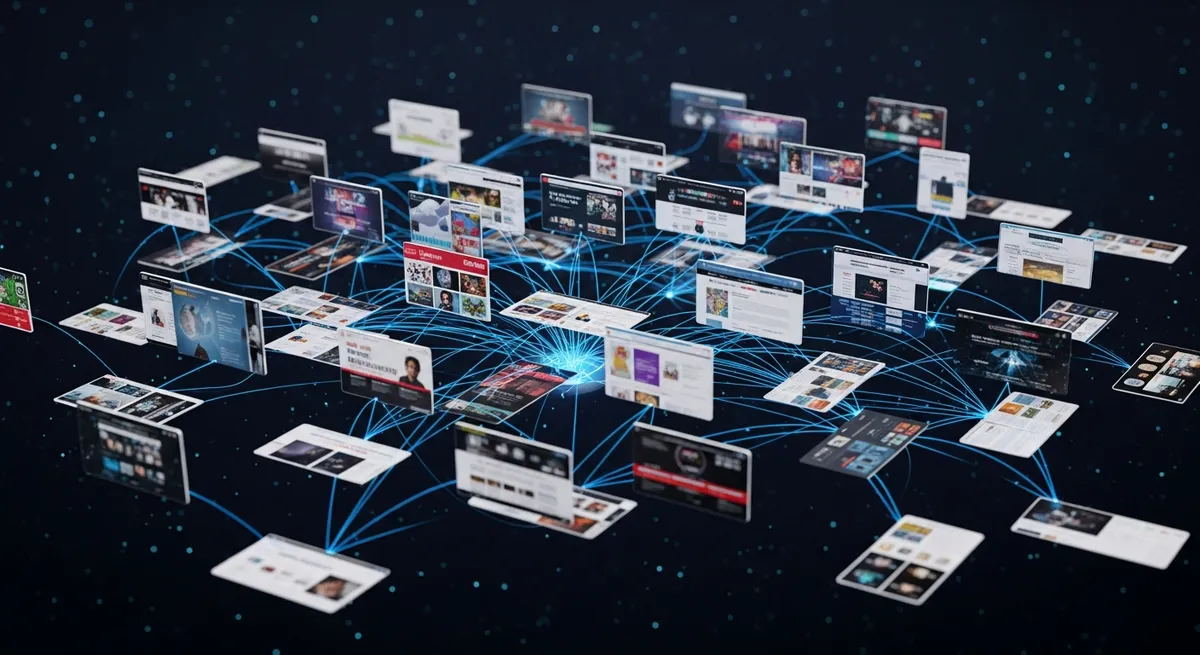
A backlink is a link from another website to yours. When a local news site writes an article and links to your business, that is a backlink. Think of backlinks as votes of confidence. Each link tells Google, "This website is worth referencing."
Two types to know:
- Dofollow links pass SEO value from the linking site to yours. These directly impact your rankings.
- Nofollow links have a tag telling Google not to pass SEO value. They still help with brand awareness and referral traffic.
Why Backlinks Still Matter in 2026
Backlinks remain one of Google's top 3 ranking factors. In the age of AI search, backlinks matter in a new way too. AI models rely on entity authority to decide which sources to cite, and entity authority is largely built through quality backlinks.
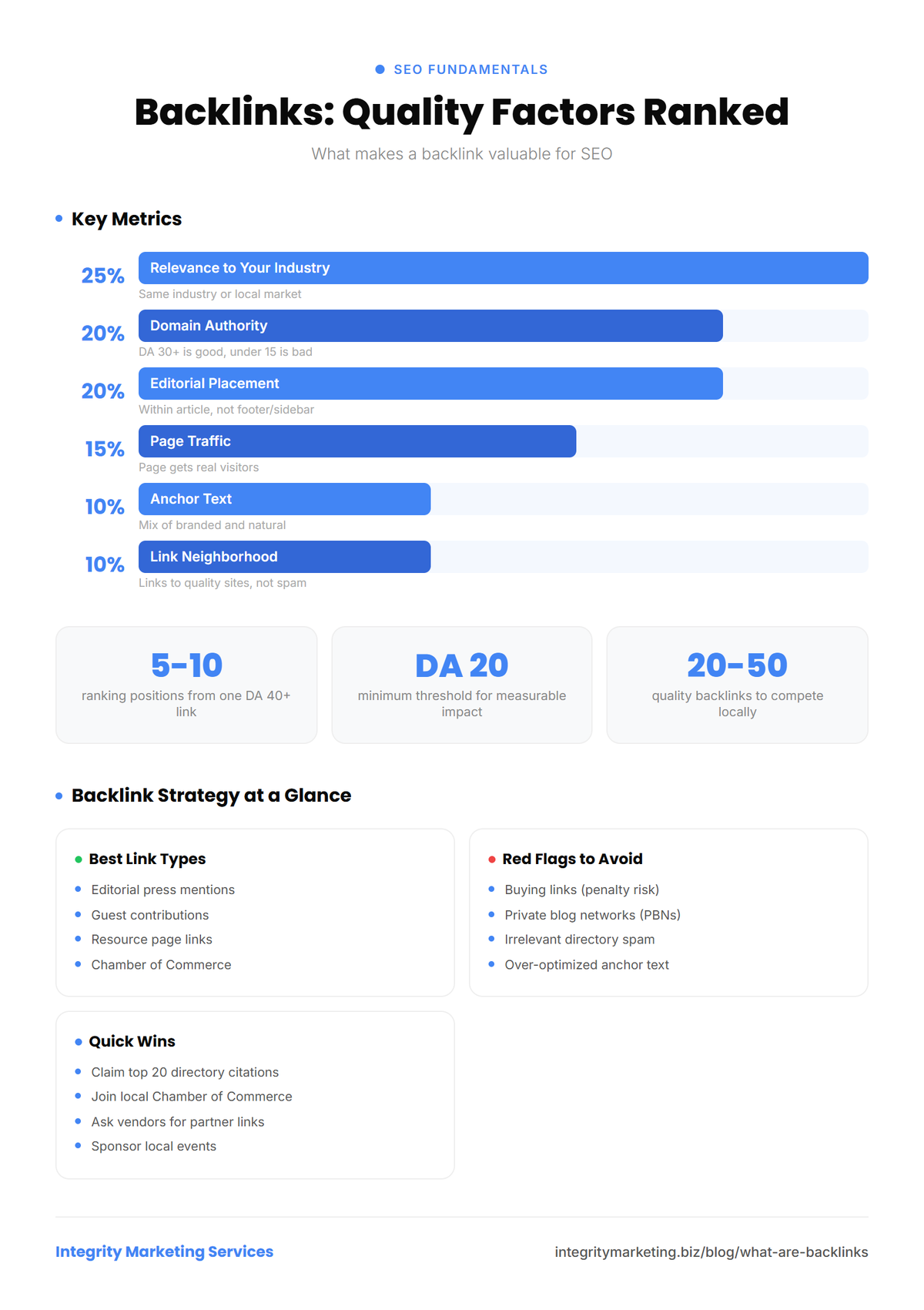
"The difference between a backlink that moves rankings and one that wastes time comes down to relevance and authority. We use a DA 20 threshold as a minimum for any link we build. Below that, the link typically has zero measurable impact. Above DA 40 from a relevant site, a single link can move a keyword 5-10 positions."
Dylan Axelson, SEO Director
What Makes a Good Backlink
Backlink Quality Factors (by weight)
Good: Same industry or local market. Bad: Completely unrelated. Check: Manual review
Good: DA 30+. Bad: DA under 15. Check: Ahrefs, Moz
Good: Within article content. Bad: Footer, sidebar, auto-generated. Check: Review the linking page
Good: Page gets real traffic. Bad: Zero traffic. Check: Ahrefs, SimilarWeb
Good: Mix of branded and natural. Bad: Exact-match keyword every time. Check: Anchor text distribution
Good: Links to quality sites. Bad: Links to spam sites. Check: Other links on page
5 Types of Backlinks (Ranked by Value)
Backlink Types Ranked by Value
Editorial Mentions (Press, News)
Guest Contributions
Resource Page Links
Directory Citations
Social Profiles
Good vs Bad Backlinks: Real Examples
"We ran a local link building campaign for a roofing client over 6 months. We built 28 quality local links from Chamber sites, news mentions, and sponsorship pages. Their DA went from 18 to 31. They went from zero first-page rankings to 11. All from links, no content changes during that period."
Dylan Axelson, SEO Director
How to Start Building Backlinks
- Claim your citations: Submit to the top 20 directories (Google, Yelp, Facebook, BBB, Apple Maps, Bing Places).
- Join your local Chamber of Commerce: The membership fee is worth it for the link alone.
- Ask your vendors and partners: Many have "partners" or "clients" pages.
- Sponsor a local event or team: These include links on event websites.
- Create linkable content: Guides, checklists, and local data that other sites want to reference.
For a complete guide, read link building for local businesses or learn about digital PR.
Backlink Red Flags to Avoid
- Buying links: Violates Google's guidelines. Risk of manual penalty.
- PBNs: Google actively detects and devalues these.
- Irrelevant directory spam: Zero value, looks spammy.
- Over-optimized anchor text: Looks manipulative to Google.
- Link exchanges: Google detects reciprocal patterns.
If you are unsure about your backlink profile, a free SEO audit can reveal toxic links.
Free Tools and Resources
These free tools can help you analyze and build your backlink profile. We are not affiliated with any of them.
- Ahrefs Free Website Authority Checker — Check any site's domain authority score for free. Useful for evaluating link prospects.
- Ahrefs Free Backlink Checker — See the top 100 backlinks to any domain. Good for competitive research.
- Moz Link Explorer — Free tool to check domain authority, linking domains, and top pages for any site.
- Google Search Console — Google's free tool shows which sites link to yours and which pages receive the most links.
Frequently Asked Questions
What is a backlink in simple terms?
A backlink is a link from another website to yours. It works like a recommendation, telling Google your site is credible.
What is the difference between dofollow and nofollow backlinks?
Dofollow links pass SEO value and directly help rankings. Nofollow links do not pass that value but still drive referral traffic and brand awareness.
How do I check what backlinks my website has?
Use Google Search Console (free) for a sample, or Ahrefs/Moz for a complete picture with quality metrics.
How many backlinks does a small business website need?
It depends on competition. In most local markets, 20 to 50 quality backlinks can be enough to compete for top positions.
Can bad backlinks get my website penalized?
Yes. If Google detects manipulative links, your site can receive a manual penalty. Use Google's Disavow Tool to address toxic links.
What is the fastest way to build quality backlinks?
Claiming directory citations (days), joining your Chamber of Commerce (1-2 weeks), and asking vendors for links (1-2 weeks). For editorial links, expect 4 to 8 weeks. Learn about professional link building.
Build authority
Want to strengthen your backlink profile?
We build link strategies that earn real, relevant backlinks from authoritative sites. No spam, no shortcuts.