
What the Google Map Pack is, and why the top three win
Short version: the Map Pack is the block of three local businesses Google shows with a map at the top of the results when someone searches for a service near them. Ranking in those three spots is the single highest-value position in local search, because that is where most of the calls go.
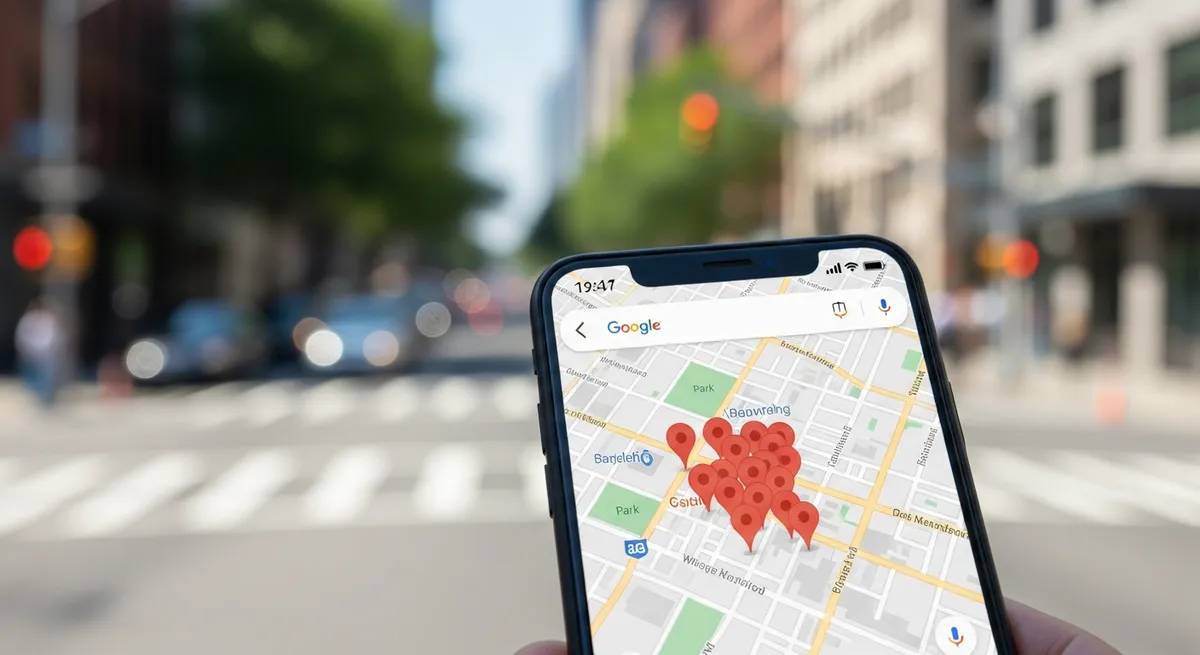
When a homeowner searches "painter near me" or "furnace repair Bellevue," Google does not just show ten blue links. Above them, it shows a map with three business listings: name, star rating, hours, and a call or directions button. That block is the Map Pack, sometimes called the local pack or the three-pack. On a phone, it fills the screen before anyone scrolls.
Those three listings capture the majority of clicks and calls for local-intent searches. A business sitting fourth or fifth, no matter how good, is on a second screen that most people never reach. That is why the top three matter more than almost any other ranking goal in local SEO. Getting into the pack is not about being the biggest company in town. It is about giving Google clear, consistent evidence that you are the right answer for that search, in that place.
The three factors Google uses to rank the Map Pack
Google has been unusually open about this. It ranks local results on three factors: relevance, distance, and prominence. Everything you do to climb in the pack maps back to one of these three.
- Relevance is how well your business matches what the person searched for. A profile that clearly states you do the exact service, in the exact area, is more relevant than a vague one.
- Distance is how far your business is from the searcher, or from the location named in the search. This one you cannot change, and it sets real limits we cover below.
- Prominence is how well known and well regarded your business is. Reviews, mentions across the web, and overall reputation all feed it. This is the factor you have the most room to improve.
You cannot move your storefront closer to every customer, but you can make your business more relevant and more prominent than the competitors at a similar distance. That is the whole game.
Optimize your Google Business Profile first
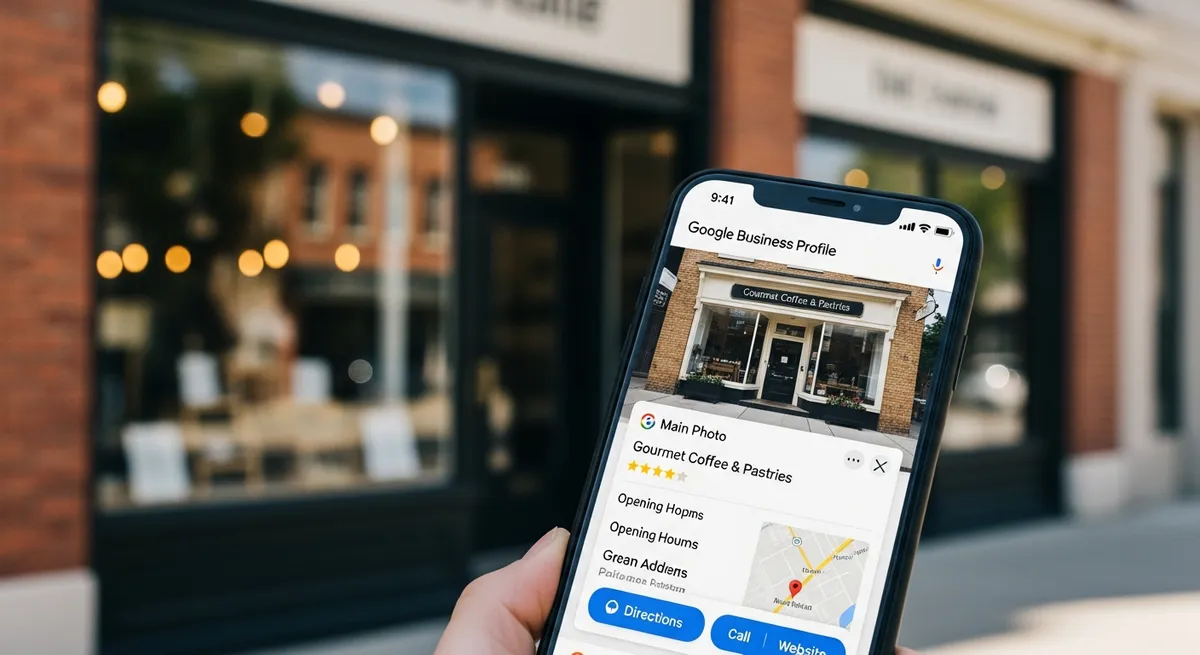
Your Google Business Profile is the listing that appears in the Map Pack, so it is where the work starts. A thin or half-filled profile will not rank, no matter how good your website is. Fill in every field Google offers and keep it current.
- Claim and verify the profile. An unverified listing has almost no chance in competitive searches.
- Complete every section. Hours, service area, phone, website, description, and attributes. Google rewards completeness because a full profile is easier to trust and recommend.
- Add real photos. Job sites, your team, your vehicles, finished work. Genuine photos signal an active business and give customers a reason to choose you.
- Use the services and products sections. List the specific work you do in plain language, so Google can match you to specific searches.
- Post regularly. Updates and offers keep the profile active, and an active profile reads as a live, engaged business.
For a deeper walkthrough of every field and setting, see our Google Business Profile guide.
Categories: the single most important setting
Your primary category tells Google what your business fundamentally is, and it carries more weight than almost any other field for relevance. A painting company should have "Painter" as its primary category, not "Contractor" or something broader. The wrong primary category quietly caps how well you can rank for the searches that matter.
Choose the most specific primary category that fits your core service, then add secondary categories for the other services you offer. Do not pad the list with categories that do not apply, because that dilutes the signal and can pull you into searches you do not want. Study the businesses already ranking in your pack, note their categories, and make sure your primary matches the intent of your best searches.
Reviews: recency, volume, and the words in them
Reviews are one of the strongest prominence signals Google has, and they influence the customer's choice once you do appear. Three things matter, and they work together.
- Recency. A steady flow of recent reviews signals an active, current business. A cluster of reviews from two years ago followed by silence reads the opposite way. Keep them coming month after month.
- Volume. More genuine reviews, and a higher average rating, build trust with both Google and the person reading. You do not need thousands, but you need enough to stand next to the businesses already in the pack.
- Keywords. Reviews that naturally mention the service and the city ("great job on our exterior painting in Kirkland") reinforce relevance for exactly those searches. You cannot script reviews, but asking a happy customer to mention the specific work they had done tends to surface those details honestly.
Ask every satisfied customer, make it easy with a direct link, and respond to reviews as they come in. Never buy reviews or post fake ones. Google detects and penalizes it, and customers see through it.
NAP consistency and citations
NAP stands for name, address, and phone number. Google cross-checks the details on your profile against the same details wherever else your business appears online: directories, review sites, industry associations, your own website. When those details agree everywhere, Google is confident about who you are and where you operate. When they contradict each other, that confidence drops, and so does your ranking.
The fixes are unglamorous but they work. Make your name, address, and phone identical everywhere, down to the suite number and the formatting. Track down old listings with a former address or a disconnected number and correct them. Build citations on the directories that matter for your trade and your region. Consistency here is one of the most overlooked levers in local ranking, and it is entirely within your control.
On-site local content still matters
The Map Pack draws on your website too, so your site has to back up what your profile claims. A business with strong local pages tends to rank better in the pack than one relying on the profile alone.
Build clear service pages for each core service, and location pages for each real area you serve, written with genuine local detail rather than a city name swapped into a template. Answer the questions customers actually ask. Make sure your NAP on the site matches your profile exactly. This is the same foundational work our broader local SEO guide covers in depth, and it compounds with everything above.
Why proximity limits how far you can rank
Here is the honest constraint. Distance is one of the three ranking factors, and it is the one you cannot optimize away. A searcher in one neighborhood and a searcher three towns over will see different Map Packs, because Google ranks partly on how close each business is to them. That is why "near me" searches feel so personal, and why no business ranks in the pack across an entire metro area.
Practically, this means you will rank strongest for searches near your physical location and fade as the searcher gets farther away. You can widen your effective radius with a stronger profile, more reviews, and better local content, all of which help you outrank closer but weaker competitors. What you cannot do is dominate the pack in a city an hour away where a dozen closer businesses have profiles as strong as yours. Understanding this keeps expectations honest and focuses the work where it can actually win.
What this looks like when it works
Legacy Painting is a good example of the full approach paying off. They were sitting on page three for painting searches, effectively invisible in the Map Pack. After tightening the profile, categories, reviews, and local content, they moved to the top of the Eastside map pack for painting searches. That is the difference between being on a page nobody scrolls to and being one of the three listings that gets the call. You can read the fuller story on the Legacy Painting case study.
Where to start
Claim and complete your Google Business Profile, set the most specific primary category that fits, and get a steady flow of recent reviews. Make your name, address, and phone identical everywhere online, then make sure your website has real local pages that back up the profile. None of it is a trick. It is consistent evidence, built patiently, that you are the right answer for a local search. See how we approach it on our SEO service page.
Frequently asked questions
How long does it take to rank in the Map Pack?
It varies with how competitive your market is and how much groundwork already exists. A profile that only needs completing and a review push can improve within weeks, while a market full of well-established competitors can take several months of consistent work. Reviews and citations compound over time, so progress tends to accelerate rather than arrive all at once.
Do I need a physical address to appear in the Map Pack?
You need a valid address to verify a Google Business Profile, but service-area businesses that travel to customers can hide the street address and show a service area instead. What you cannot do is invent a location you do not operate from, because Google verifies addresses and removes listings that misrepresent them.
Why do I rank in one town but not the next one over?
Distance is one of Google's three local ranking factors, so the Map Pack a person sees depends partly on where they are. You will rank strongest near your physical location and weaker as searchers get farther away, where closer competitors have the proximity advantage. A stronger profile and more reviews can widen that radius, but they cannot erase distance entirely.
Can more reviews alone get me into the top three?
Reviews are one of the strongest prominence signals, but they work alongside category selection, NAP consistency, and local content, not instead of them. A business with great reviews but the wrong primary category or contradictory listings will still struggle. The businesses that win the pack get all of these factors pointing the same direction.
Own your local market
Want to dominate local search results?
Local SEO puts your business in front of customers searching for your services in your area. We build local visibility that compounds over time.