
Who you are actually marketing to
Short version: kitchen, bath, and whole-home remodeling projects are large, considered purchases. The homeowner is not calling on impulse. They are researching for weeks, comparing three to five firms, and looking for proof that you can deliver the result they are picturing. Your marketing has to do two jobs at once: get found while they are researching, and give them enough proof to shortlist you.
This is the difference between remodeling and most home services. A clogged drain gets fixed by whoever answers the phone first. A forty-thousand-dollar kitchen gets awarded after the homeowner has read reviews, looked at completed projects, gathered a few estimates, and decided which firm feels least risky. The remodelers who win are not always the cheapest. They are the ones who look the most credible at every step of that research.
On our remodeler marketing page we break down the full system. This guide walks through the pieces that matter most and the order to build them in.
How remodeling buyers actually decide
Understanding the buying journey tells you where to spend. A typical kitchen or bath project follows a predictable path.
- Inspiration. The homeowner starts saving photos and forming a picture of what they want. They are not ready to talk to anyone yet.
- Research. They start searching costs, timelines, and options, and they begin looking at local firms. This is where most of your visibility work pays off.
- Shortlisting. They narrow to three to five firms based on reviews, completed work, and first impressions of each website.
- Estimates and selection. They request quotes, meet with a few firms, and choose the one that feels most capable and least risky.
Notice that price enters late, and only after trust is established. That is why a portfolio and reviews outperform a discount. Your marketing job is to be present during research, convincing during shortlisting, and easy to contact when they are ready for an estimate.
Your website is your portfolio, so lead with the work
For a remodeler, the website is not a brochure. It is the single most important sales asset you have, because it is where a shortlisting homeowner decides whether you belong on their list. The firms that win lead with the work itself.
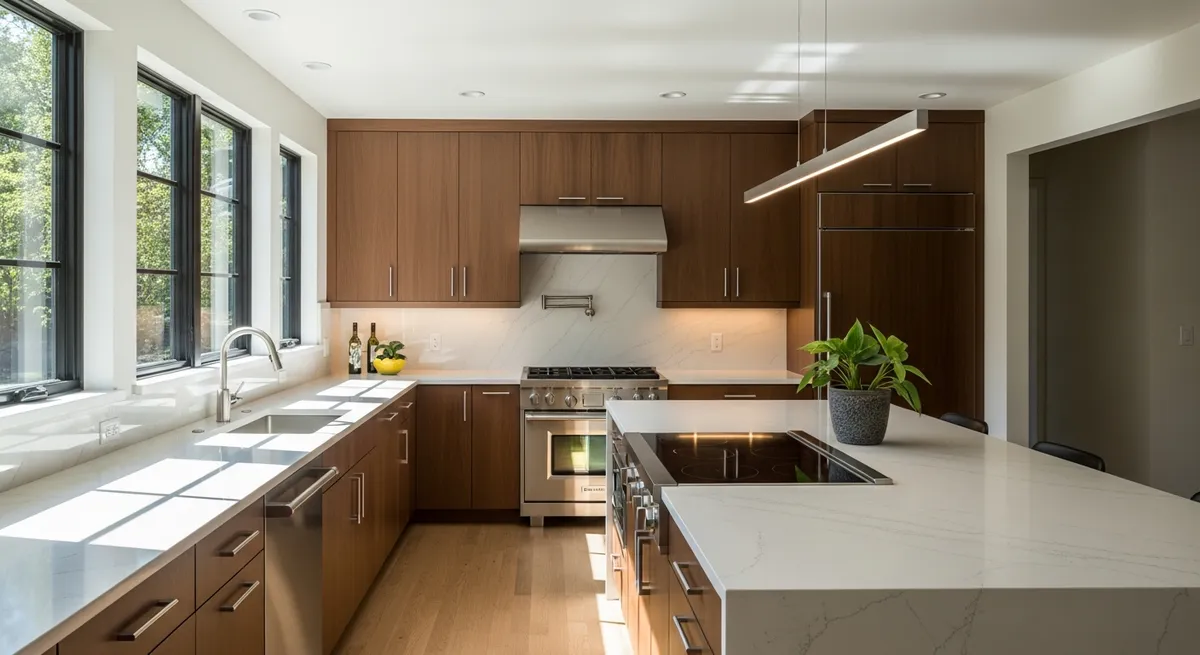
A portfolio-first site puts completed projects at the center. Every kitchen, bath, and whole-home remodel becomes a project page with generous, high-quality photography. Before-and-after images do the heaviest lifting, because they let a homeowner see the transformation you are capable of and picture their own space in it. A grid of finished kitchens says more than any paragraph about craftsmanship.
The results are measurable. Eastside Kitchen and Bath doubled their remodeling leads after moving to a portfolio-first site built around their completed projects. The work was always good. The old site simply did not show it in a way that convinced a researching homeowner to reach out. You can read the full story in our Eastside Kitchen and Bath case study.
A strong remodeler site includes a few things beyond the gallery:
- Project pages organized by type. Separate sections for kitchen, bath, and whole-home work, so a homeowner searching for a bathroom remodel lands on bathroom projects, not a mixed feed.
- Real photography, not stock. Homeowners can tell the difference immediately, and stock photos quietly undermine the trust the rest of the site is trying to build.
- Clear next steps. An obvious way to request a consultation on every page, without burying the phone number or the form.
- Proof alongside the work. Reviews, awards, and years in business placed where a shortlisting homeowner will see them.
If your current site hides your best projects or was built before you had a real body of work to show, a rebuild usually pays for itself. Our web design service is built around exactly this kind of portfolio-first structure.
Google Ads that qualify the budget before the click
Remodeling is one of the categories where paid search works well, because intent is high and the project value is large enough to justify a real cost per lead. The trap is spending on clicks from people who want a fifteen-hundred-dollar cosmetic touch-up when you build forty-thousand-dollar kitchens. The fix is to structure campaigns by project type and to write copy that qualifies the budget before the click.
Structure campaigns around the projects you actually want. A dedicated kitchen remodel campaign, a bath remodel campaign, and a whole-home campaign each let you match the ad, the landing page, and the budget to the real value of that work. Someone searching "kitchen remodel contractor" is worth more than someone searching "cheap cabinet refacing," and separate campaigns let you bid accordingly.
Budget-qualifying copy does the filtering for you. Ad copy that signals custom work, design-build capability, and premium finishes will gently discourage bargain hunters and attract homeowners ready to invest. Language like "custom kitchen design and build" or "full-service bath remodeling" sets expectations before anyone spends your click budget. You are not trying to maximize clicks. You are trying to maximize the right clicks.
Done well, this discipline shows up directly in cost. Freimark Construction cut their cost per conversion by fifty-five percent, from about two hundred fifteen dollars to about ninety-six dollars, by tightening campaign structure and focusing spend on the project types and search terms that actually converted. The budget did not change. The way it was spent did.
A few principles keep remodeling ad spend efficient:
- Separate campaigns by project type so budget follows value.
- Use negative keywords aggressively to filter out repair, rental, and DIY searches that will never become projects.
- Send each ad to a matching landing page, not a generic homepage, so the promise in the ad is kept on arrival.
- Track conversions properly so you know cost per lead by project type and can shift budget toward the work you want more of.
Our Google Ads service handles this structure and the ongoing tuning that keeps cost per lead moving in the right direction.
Cost-guide content earns the research-phase visitor
Remember that most remodeling buyers spend weeks researching before they contact anyone. The single most searched question in that phase is cost. "How much does a kitchen remodel cost," "bathroom remodel cost in my area," "what does a whole-home renovation run." Firms that answer those questions honestly earn visibility at the exact moment a homeowner is forming their shortlist.
Cost-guide content is not about giving away pricing that ties your hands. It is about being the credible source that explains the ranges, the variables, and the tradeoffs. A good kitchen cost guide walks through what drives price: cabinetry, countertops, layout changes, appliances, and finishes. It sets realistic expectations and positions you as the firm that talks straight. A homeowner who learns what a project costs from your page is far more likely to call you than the firm that hid the topic.
This content also does double duty. The same clear, question-answering pages that rank in Google are the pages AI search tools draw from when a homeowner asks an assistant what a remodel costs in their area. Writing plainly for real questions serves both.
Beyond cost, useful research-phase topics include project timelines, how to choose a remodeler, permits and what to expect during construction, and material comparisons. Each one meets a homeowner in research mode and starts the relationship before a single estimate is requested.
Reviews and financing close the gap to yes
Two things consistently move a shortlisted homeowner to a signed contract: social proof and a way to afford the project.
Reviews are the strongest form of proof a remodeler has. A large, considered purchase carries real risk in the homeowner's mind, and recent, detailed reviews are how they reassure themselves. Ask every satisfied client for a review, make it easy, and keep them current. A steady stream of recent reviews reads as an active, trusted firm. A cluster of reviews from three years ago reads as a firm that may have slowed down. Reviews that mention the specific project type also help, because a homeowner planning a bathroom wants to see other bathroom clients who were happy.
Financing widens your market. Kitchen and whole-home projects are large enough that many qualified homeowners think in terms of monthly payments, not lump sums. Offering financing, and saying so clearly on your site, removes a real barrier and keeps price-sensitive but serious buyers in the conversation. It is often the difference between a project that happens this year and one that gets postponed indefinitely.
Putting it together
The remodelers who win high-value projects are not doing one thing brilliantly. They are doing the whole sequence competently: a portfolio-first site that proves the work, project-type ads that attract the right budget, cost-guide content that captures research-phase homeowners, and reviews and financing that close the gap to yes. Each piece reinforces the others. The portfolio makes the ads convert, the content feeds the pipeline, and the reviews make the whole thing believable.
If you are starting from scratch, start with the website, because everything else drives traffic to it. Then layer in ads and content once the destination is worth sending people to.
Frequently asked questions
How much should a kitchen and bath remodeler spend on marketing?
It varies with your growth goals and market, but the more useful question is where the spend goes. For remodelers, the website comes first because it is where every other channel sends people. Once that is strong, paid search tends to deliver the fastest return given the high project values, followed by content and reviews that compound over time. We size the budget to your target project volume rather than a flat percentage.
How long does it take to see results?
Google Ads can generate qualified leads within the first few weeks once campaigns are structured and tracking is in place. Portfolio and content work, along with reviews, build over months and create the durable visibility that lowers your reliance on paid clicks. Most remodelers we work with see paid results first and organic momentum building through the first two quarters.
Why is a portfolio so important for a remodeler specifically?
Because remodeling is a high-trust, high-value purchase, and homeowners buy the result before they buy the firm. Before-and-after project photography lets them see what you can do and picture their own space transformed. Eastside Kitchen and Bath doubled their remodeling leads after moving to a portfolio-first site, without changing the quality of their work. The site simply started showing it.
Do cost guides scare off customers by revealing pricing?
They do the opposite. Homeowners search for cost first, and the firm that answers honestly earns their trust and their call. A good cost guide explains ranges and the variables that drive them, which sets realistic expectations and positions you as the straight-talking expert, rather than committing you to a fixed number.
Need help?
We write about what we actually do
Every article comes from real client work and real results. If you want that for your business, let us know.