

Marketing for contractors
Contractor Marketing That Fills Your Pipeline With Qualified Leads
Contractors do not need more leads. They need better leads. The difference starts with how your marketing is set up.
The landscape
Why contractor marketing is different
The difference between a $500 handyman request and a $150,000 custom build starts with how your marketing is set up. What keywords you are bidding on, what your website communicates in the first five seconds, and whether your Google Business Profile looks like a real company or an afterthought. Most contractors we onboard are running broad match campaigns with zero negative keywords, sending paid traffic to a homepage built in 2016, and wondering why the phone only rings with tire-kicker leads.
We manage marketing for 13+ general contractors across the Pacific Northwest. Blue Sound Construction, Constant NW, AP Custom Builders, Bauer Homes, and others. Residential remodels, new construction, commercial projects. The work is different for each, but the marketing mistakes we see on day one are almost always the same. Broad match campaigns bleeding budget on irrelevant searches, no portfolio on the website, and a Google Business Profile with three photos and no reviews from the past six months.
Contractor marketing is not the same as marketing for painters or plumbers. The project values are higher, the sales cycles are longer, and the keyword landscape is full of traps. "Contractor near me" pulls in everything from handyman requests to people looking for independent contractor tax advice. The money is in project-specific, location-specific terms. Getting that right requires experience with the trade, not a generic playbook.
Every account, asset, and line of content belongs to you. Nothing held hostage. If we part ways, you keep it all.
Lakeside Industries: +210% page views after unifying 12 divisions into one platform.
A fragmented web presence costs more than a unified one. SEO-ready architecture from day one.
0
Outsourced
2
WA + ID offices
1
Point of contact
Search behavior
How contractors customers actually search
Project-specific searches
Homeowners with a specific project in mind convert at the highest rates. These searches indicate they have already decided to hire, they are just choosing who. Your ads and landing pages need to match the exact project type they are searching for.
Commercial and institutional searches
Commercial clients search differently. The sales cycle is longer, project values are higher, and decision-making involves multiple stakeholders. Targeting these with the same campaign as residential is a guaranteed way to waste budget on both.
Research-phase searches
These searchers are 2 to 6 months from hiring. They will not convert on a first visit, but capturing them with helpful content means you are the contractor they remember when they are ready. Cost guides and how-to articles serve this audience well.
Trust and validation searches
These searches happen after a homeowner has already seen your name. They are validating their decision. Strong reviews, a professional website, and visible licensing information close the deal at this stage.
What we see
Marketing mistakes we see from contractors
Broad match ads with no negative keywords
We see this in nearly every contractor account we audit. The campaign is set to broad match on "contractor" and the search term report is full of "contractor jobs," "contractor salary," "how to get a contractor license," and "independent contractor taxes." At $15 to $45 per click, a single month of this can waste $1,500 to $3,000 on searches that will never convert into a project.
Build tight keyword lists segmented by project type. Add 200+ negative keywords on day one. Review search term reports weekly for the first 90 days, then biweekly after that.
No website or a site built 8+ years ago
A homeowner evaluating a $75,000 remodel will spend about five seconds on your website before deciding whether to request an estimate or hit the back button. If your site has no portfolio, no license information, stock photos of smiling people in hard hats, and a contact form buried three clicks deep, those five seconds end badly. Google Ads clicks that should convert at 8 to 12% convert at 1 to 2% instead, and you blame the ads.
Build a portfolio-first website with project galleries organized by type, license and insurance badges above the fold, and clear estimate request flows on every page.
No review generation system
You complete 50 to 100 projects a year. Clients are happy. But your Google Business Profile shows 12 reviews, and half of them are from 2021. Meanwhile, a competitor with objectively worse craftsmanship has 85 reviews and a 4.8-star rating. They get the call because reviews are the first thing homeowners check, and volume plus recency matter more than perfection.
Set up an automated review request workflow triggered at project completion milestones. Text-based, two taps to leave a review. Consistency beats volume. Five reviews per month compounds fast.
Industry data
Contractors marketing benchmarks
Average CPC
$15–$45
General contractor CPCs range from $15 to $45 per click. "Contractor near me" is cheap but low-quality. Project-specific terms like "custom home builder" cost more but convert at much higher rates.
Target cost per lead
$75–$250
Cost per lead varies dramatically by project type. A handyman inquiry and a $200K custom build come from different keywords at different price points. Proper segmentation is what separates profitable campaigns from budget drains.
Lead-to-close rate
15–25%
Contractors with portfolio-driven websites and project-type segmented campaigns close at higher rates because leads arrive pre-qualified by scope and budget.
What good contractors marketing looks like
A portfolio-first website
Your website is not a digital business card. It is a conversion tool. Project galleries organized by type (kitchens, additions, commercial, new builds), license and insurance badges above the fold, clear calls to action on every page, and before/after photography that shows your craftsmanship. Homeowners evaluating $50K+ projects need visual proof. Stock photos do not close contracts.
Google Ads segmented by project type
One campaign for kitchen remodels. Another for additions. Another for commercial. Each with its own keyword set, landing page, and budget. This is how you stop paying $40 per click for someone looking for a handyman. Our 13+ contractor accounts give us a deep negative keyword list that eliminates waste from day one.
Local SEO that compounds over time
"[City] kitchen remodel contractor." "[City] licensed general contractor." "[City] home addition builder." These keywords drive organic traffic month after month without per-click costs. Most contractor sites rank for nothing because they have one generic "services" page and zero location content. Building out project-type pages and location pages creates compounding organic visibility.
A review engine that runs itself
Reviews are the most underused asset in contractor marketing. You complete 50 to 100 projects a year. If even half of those clients leave a Google review, you dominate the Map Pack within 12 months. The key is consistency: automated text-based requests at project milestones, a direct link that takes two taps, and a team habit of asking every single time.
Results
Contractors clients we have worked with

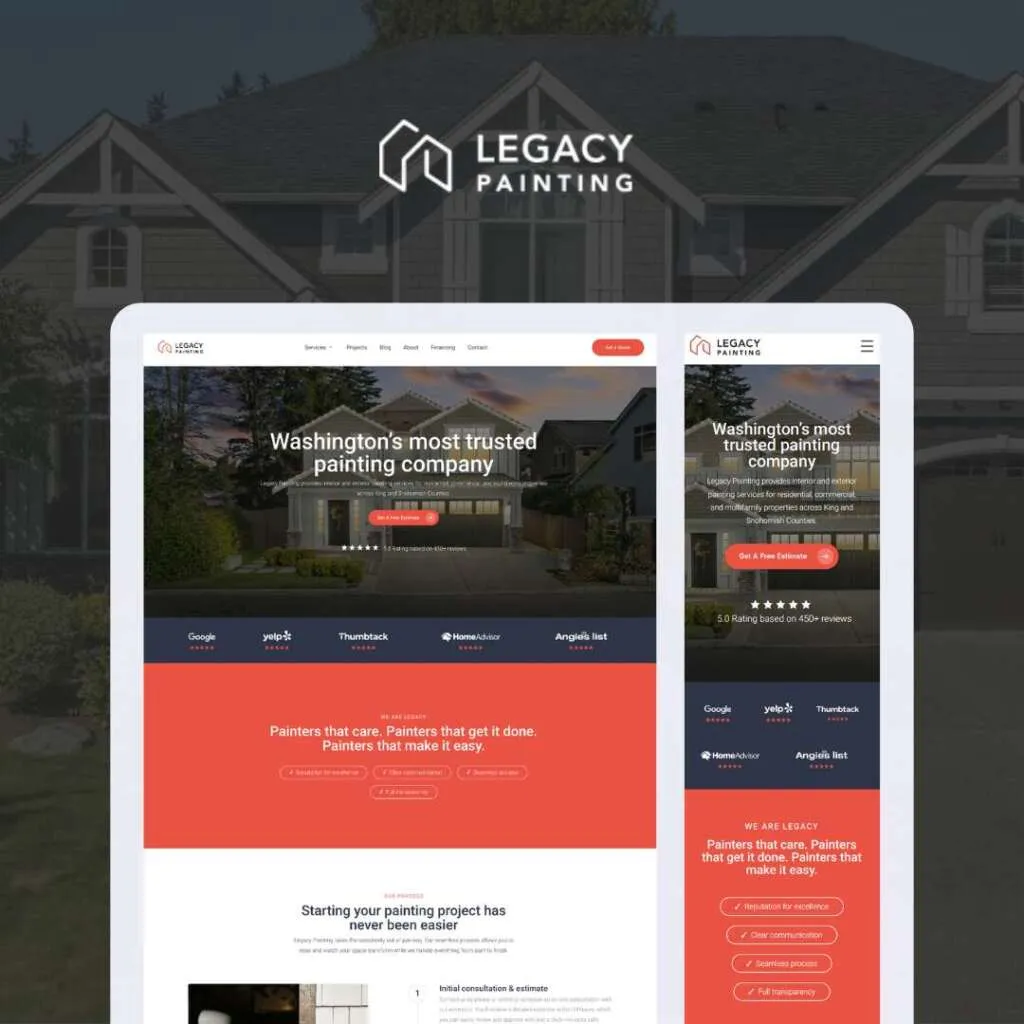
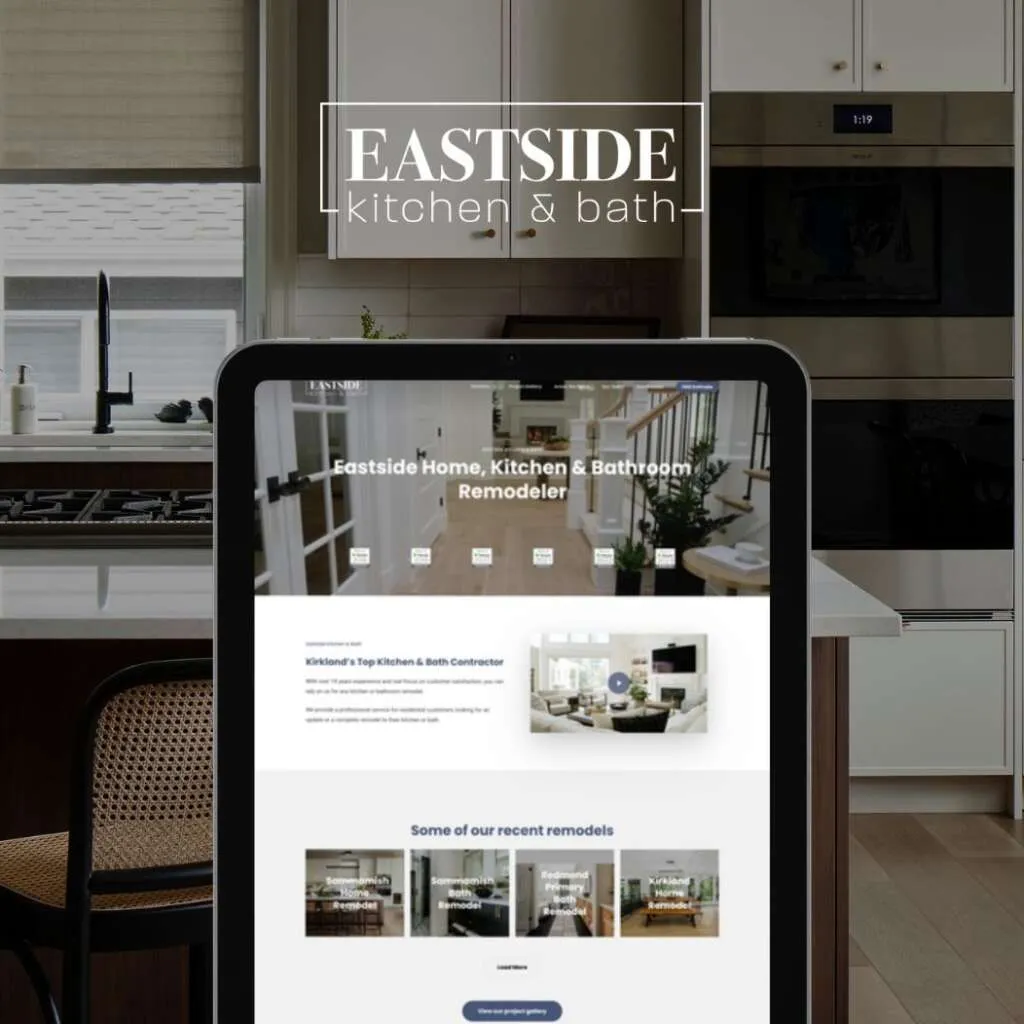
The pattern is always the same. Contractor spending $3,000 a month on Google Ads, broad match everything, no negative keywords. They think marketing does not work. The campaign setup was the problem.
Lakeside Industries: +210% page views after unifying 12 divisions into one platform.
A fragmented web presence costs more than a unified one. SEO-ready architecture from day one.
100+
Five-star reviews
2018
Founded
9
In-house team
0
Outsourced work
What we offer
Services for contractors
SEO
We target project-type keywords like "custom home builder [city]," "commercial tenant improvement contractor," and "ADU construction cost" that separate $150K builds from $500 handyman requests. Service area pages, project-type content, and cost guides capture high-intent searches where the homeowner has budget and timeline.
Google Ads
Campaigns segmented by project type (new construction, remodel, commercial, ADU) with negative keyword lists refined across 13+ active contractor accounts. These lists block searches for "handyman," "DIY," and "contractor license lookup" that bleed budget on clicks that will never convert to estimate requests.
Web Design
Portfolio-driven sites organized by project type with before/after photography, project cost ranges, and license/insurance/bond badges visible above the fold. Homeowners spending $50K+ need to trust you before they call. Your site is the first interview, and most contractor sites fail it in the first 3 seconds.
GEO
When someone asks ChatGPT "best general contractor for home additions in [city]," your portfolio, certifications, and review volume need to be structured for AI citation. We optimize your content so AI search engines recommend your company for project-specific queries with your credentials attached.
FAQ
Contractors marketing FAQ
The best contractor marketing strategy combines a portfolio-driven website, Google Ads segmented by project type, local SEO targeting "[service] contractor [city]" keywords, and automated review generation. Integrity Marketing manages 13+ active contractor accounts using this approach in the Seattle and Boise markets.
Most contractors invest $2,000 to $6,000 per month across Google Ads spend and management fees. Integrity Marketing recommends starting with Google Ads at $1,500 to $3,000 in ad spend, then layering in SEO after the first 3 months for compounding returns.
SEO works well for contractors because competition is surprisingly low. Most contractor websites have minimal content and poor technical setup, creating real opportunity. Integrity Marketing typically sees ranking movement within 3 to 6 months for contractors in the Seattle and Boise metro areas.
Google Ads can generate qualified estimate requests within the first week of launching. SEO takes 3 to 6 months for meaningful ranking movement. At Integrity Marketing, we recommend running both simultaneously so paid campaigns deliver leads while organic visibility builds.
Google Ads delivers immediate visibility and you pay per click, typically $15 to $40 for contractor keywords. SEO builds organic rankings over time with no per-click cost. Most contractors at Integrity Marketing run both channels to capture leads across the full search results page.
A website is critical for any contracting business. It is where Google Ads traffic lands, where homeowners verify your credibility, and where SEO rankings live. Integrity Marketing builds portfolio-first contractor websites with project galleries, license badges, and clear estimate request flows.
The most common reasons are no clear call to action, no project portfolio, missing trust signals like license numbers and reviews, slow mobile load time, and zero SEO work. Integrity Marketing audits contractor websites to identify exactly which gaps are costing leads.
Start with Google Ads if you need leads immediately. Add SEO within the first 6 months for long-term cost reduction. At Integrity Marketing in Kirkland, WA, most contractor clients run both channels with a 3-month Google Ads initial agreement and 6-month SEO commitment.
What works for contractor marketing? A portfolio-driven website, Google Ads campaigns segmented by project type, local SEO targeting "[service] contractor [city]" keywords, and a review generation system. We manage 13+ active contractor accounts.
Related reading
Contractors marketing insights
Ready to grow your contractor business?
Tell us where you're at and we'll show you what's possible.