
Not all electrical work pays the same
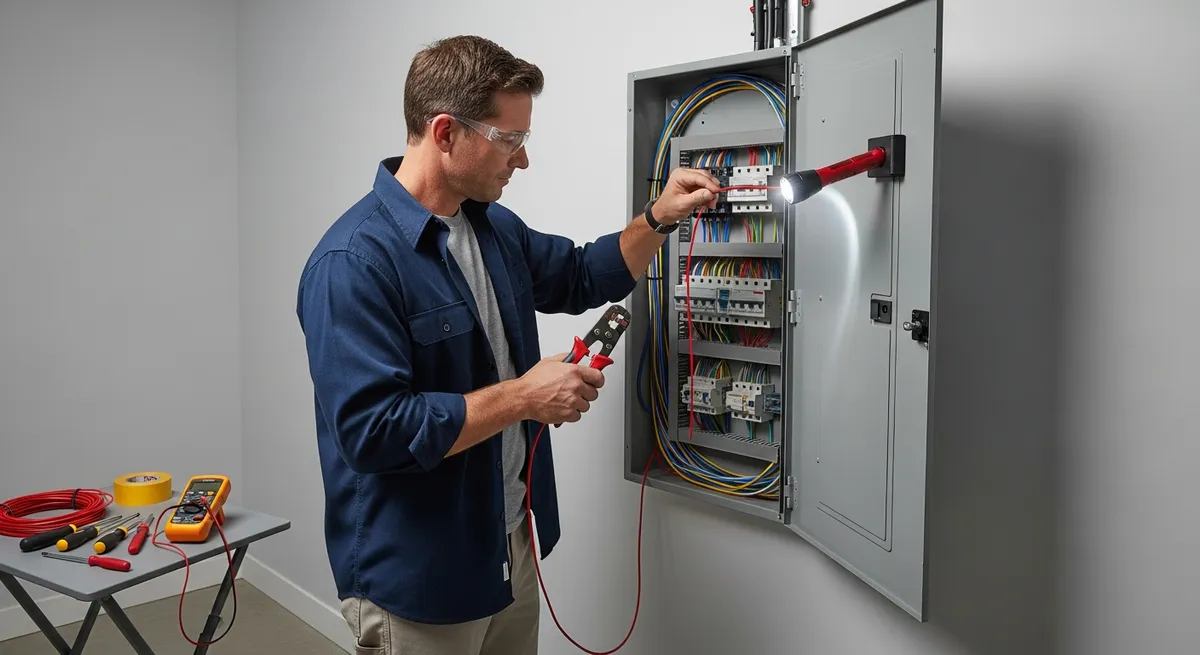
Short version: the electricians who grow are not the ones with the most calls. They are the ones whose marketing is built to attract the right calls. A panel upgrade, an EV charger install, or a whole-home rewire is worth many times a single outlet swap, and the work it takes to book one is not much different. The goal of your marketing is to fill the schedule with the jobs that carry your business.
Most electricians we talk to are busy. That is not the problem. The problem is that the phone rings for a dead outlet or a tripped breaker as often as it rings for a service upgrade, and the low-value calls crowd out the high-value ones. Good marketing is not about volume. It is about steering the mix of work toward the jobs that fund your growth.
We work with electrical contractors including Crane Electric, Sare Electric, and Raincap Construction Electric, and the pattern is consistent: the wins come from being visible for the specific, higher-value searches, and from a website and follow-up process that turns those searches into booked jobs.
Decide which jobs you actually want
Before spending a dollar on marketing, get specific about the work you want more of. For most residential electricians, the jobs worth chasing look like this:
- Panel upgrades and service changes. Older homes with 100-amp or fuse-based panels need upgrades to support modern loads. High ticket, and often urgent once a homeowner understands the risk.
- EV charger installations. A fast-growing category as more homeowners buy electric vehicles. These buyers are searching by name for the exact service, which makes them easy to target and easy to close.
- Whole-home rewires. Knob-and-tube or aluminum wiring replacement is a large project with a long decision window, which rewards a business that stays visible and easy to trust.
- Generator and subpanel work. Standby generators, hot tub circuits, and shop subpanels are planned purchases with real budgets attached.
Once you know the jobs, every marketing decision gets easier. Your pages, your ads, and your follow-up all point at the same targets instead of trying to be everything to everyone.
Use Google Ads to buy the right calls, not every call
Google Ads is the fastest way to appear at the top of the results for a search like "panel upgrade near me" or "EV charger installer." The catch is that the same account, left unmanaged, will also pay for clicks from people looking for a free quote on a single switch, a DIY tutorial, or a job you do not want. That is where the money leaks.
The lever that separates a profitable electrician campaign from an expensive one is the negative keyword list. Negative keywords tell Google which searches to skip. For an electrician that usually means blocking terms like "salary," "apprentice," "how to," "cheap," "used," and searches for jobs outside your service area or your target list. Done well, this quietly redirects your budget toward the searches that actually turn into panel and EV work.
A few principles we apply to Google Ads for service businesses:
- Separate campaigns by job type. A panel-upgrade searcher and an EV-charger searcher want different things. Splitting them lets you write ads and set budgets for each.
- Build the negative keyword list before launch, then keep pruning it. The search terms report shows exactly what people typed to reach you. Every irrelevant term is a new negative keyword.
- Point ads at a page about that job, not your homepage. Someone searching for an EV charger install should land on a page about EV charger installs, with a clear next step.
- Track calls and form fills as conversions. Without conversion tracking you are guessing. With it, you can move budget toward the ads that book real jobs.
Ads for contractors have their own quirks, from local service targeting to call tracking, which is why we treat contractor ad management as its own discipline rather than a generic setup.
Win local search and the map pack
Ads bring calls the day they turn on, but they stop the day you turn them off. Local SEO is the compounding side of the strategy: the work that keeps you visible in the organic results and the Google map pack without paying for every click.
When a homeowner searches "electrician near me" or "panel upgrade" and their city, Google shows a map with three local businesses at the top. That block, the map pack, gets a large share of the clicks and calls. Earning a spot there comes down to a few things:
- A complete, accurate Google Business Profile. Correct name, address, phone, hours, service area, and service list, with photos of real jobs. This is the single biggest local ranking factor most electricians neglect.
- Consistent business details everywhere. Your name, address, and phone should match across your website, your profile, and every directory. Contradictions make Google less confident and push you down.
- Service pages for each job type. A dedicated page for panel upgrades, one for EV chargers, one for rewires. Each one is a chance to rank for that specific search and to speak directly to that buyer.
- Location pages for the cities you serve. Real, locally specific pages for each service area, not the same page with the city name swapped out.
This is the heart of our SEO work: building a site that earns high-value searches month after month, so your marketing gets cheaper per job over time instead of more expensive.
Reviews are your closing argument
Electrical work involves safety, code, and trust with someone inside a customer's home. A strong, recent set of reviews does more to win a panel upgrade or a rewire than any ad headline. Reviews also feed local rankings, so they help you get found and help you close.
The businesses that win here have a simple, consistent habit: they ask every satisfied customer for a review, they make it easy with a direct link, and they respond to the ones they get. A steady stream of recent reviews reads as an active, dependable business. A burst from two years ago reads as one that may not be around anymore.
Your website has to be fast and built to capture leads
All of this drives people to your website, and that is where a lot of electricians lose the job. A slow site, a phone number that is hard to find, or a contact form buried three clicks deep will waste the clicks you paid for and the rankings you earned.
A website built to book high-value work does a few things well:
- Loads fast on a phone. Most local searches happen on mobile, and every extra second of load time costs you calls.
- Puts the phone number and a call button in reach on every page. Many electrical buyers want to call, especially when the issue feels urgent.
- Uses short, clear forms. Ask for the few things you need to quote, not a full intake. Every extra field costs you leads.
- Speaks to the high-value jobs. The pages a buyer lands on should describe panel upgrades, EV chargers, and rewires plainly, with proof and a clear next step.
Speed to the first reply matters just as much as the site. The electrician who calls back in five minutes usually wins over the one who calls back tomorrow. A simple process for responding fast to every lead protects the money you spend getting them.
Ads and SEO work best together
The most common question we get is whether to run ads or invest in SEO. For most electricians the honest answer is both, and they are stronger together than apart.
Ads give you calls immediately and let you test which jobs and which messages convert. SEO takes longer to build but keeps paying after the fact and lowers your cost per job over time. Run together, ads fund the schedule while SEO compounds underneath, and each one teaches you something about the other. The search terms that convert in your ad account tell you which SEO pages to build next. The pages that rank organically tell you where you can ease off paid spend.
You do not have to do everything at once. Start with the one or two job types that matter most, get the tracking right, and expand from there. The electricians who grow steadily are the ones who treat marketing as a system pointed at the right work, not a series of one-off tactics.
Frequently asked questions
How much should an electrician spend on Google Ads? There is no single right number, because it depends on your market, your service area, and the jobs you are targeting. The better way to think about it is cost per booked job. Start with a budget you can sustain for a few months, track calls and form fills as conversions, and adjust once you can see what a booked panel upgrade or EV install actually costs you to win.
How long does SEO take to work for an electrician? Local SEO is a compounding investment, not an overnight one. Improvements to your Google Business Profile and reviews can show up in weeks, while service and location pages typically build momentum over several months. The tradeoff is that once those pages rank, they keep bringing in work without paying per click.
Should I target EV charger installs even though it is a newer service? For most residential electricians it is worth it. Demand is growing, and these buyers tend to search by name for the exact service, which makes them straightforward to reach with a dedicated page and a focused ad campaign. A clear page about EV charger installation also helps you show up when homeowners research the job.
Do I need a new website to get more high-value jobs? Not always. If your current site loads fast, works well on a phone, and makes it easy to call or fill out a short form, it may only need better pages for your target jobs. If it is slow, hard to use on mobile, or missing clear service pages, fixing that is usually the highest-return place to start. You can see how we approach electrical marketing on our electricians page.
Need help?
We write about what we actually do
Every article comes from real client work and real results. If you want that for your business, let us know.